
Ph.D. in Communication and Media
The Ph.D. in Communication and Media (pending SACSCOC approval) prepares students to investigate how communication and media shape people, organizations and society and to use that research to address challenges in a rapidly changing world.
Through close faculty mentorship, rigorous research-methods training and interdisciplinary study, you’ll develop the expertise to pursue original research across communication, media and strategic communication.
The Fall 2027 cohort will be the inaugural class of doctoral students in the Bob Schieffer College of Communication’s Ph.D. in Communication and Media.
Admission Requirements Request Information Apply Now
At a Glance
| LOCATION | FORMAT | START | DURATION | FUNDING |
| IN-PERSON, FORT WORTH, TEXAS |
FULL TIME | FALL 2027 |
54 CREDIT HOURS 4 YEARS |
TA AND TUITION WAIVERS |
Why Schieffer?
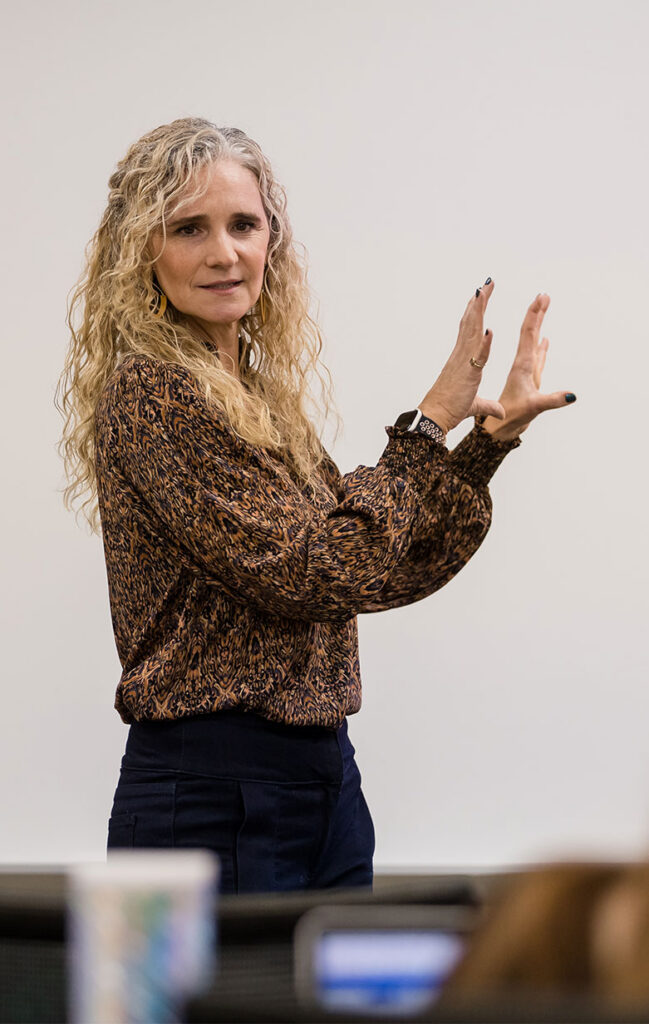 At Schieffer College, you’ll work closely with faculty researchers, develop your own research agenda and join a small doctoral community.
Your doctoral experience includes:
→ Close faculty mentorship.
Work with faculty mentors from admission through dissertation.
→ A collaborative doctoral cohort.
Learn alongside a focused group to foster collaboration, discussion and individualized support.
→ Interdisciplinary research.
Communication doesn’t happen in a silo. Draw on theories, methods and perspectives from multiple fields.
→ Research beyond the classroom.
Build connections with industry partners and connect your research in the country’s fourth largest metropolitan area.
→ Tools for a changing media landscape.
Gain hands-on experience with emerging tools and research approaches through the Schieffer Media Insights Lab.
→ Designed for research with impact.
Build the theoretical, methodological and professional skills to conduct research that helps people understand their communication challenges.
Where This Ph.D. Can Lead
Our program prepares you for research and teaching in higher education as well as advanced research roles beyond the university. Through coursework, mentorship, teaching and research, you’ll develop skills, such as:
• Communication theory and scholarship
• Quantitative and qualitative research methods
• Digital and social analytics
• Interdisciplinary research
• Teaching and pedagogy
• Academic writing and publication
• Conference presentation and scholarly communication
• Independent research and project development
Depending on their research interests and professional goals, students may pursue careers in higher education; strategic, corporate or organizational communication; consulting, research and analytics; public affairs; audience and consumer insights; user experience research; and other research-intensive fields.
Funding Your Doctorate
| $32,000 TA stipend |
85% of Student Health Insurance covered |
Tuition waivers available for merit-based recipients |
Eligible students may be considered for a Teaching Assistantship offering a $32,000 academic-year stipend, full tuition waiver and an award covering 85% of student health insurance costs. Competitive full or partial tuition waivers may also be available through separate funding opportunities.
Assistantships and tuition waivers are competitive. Review the funding page for eligibility, renewal terms and uncovered expenses.
→ Explore funding options
Two Paths. One Shared Foundation.
All doctoral students complete a common foundation in communication theory, research methods and professional development. From there, choose which concentration to pursue.
Communication Studies
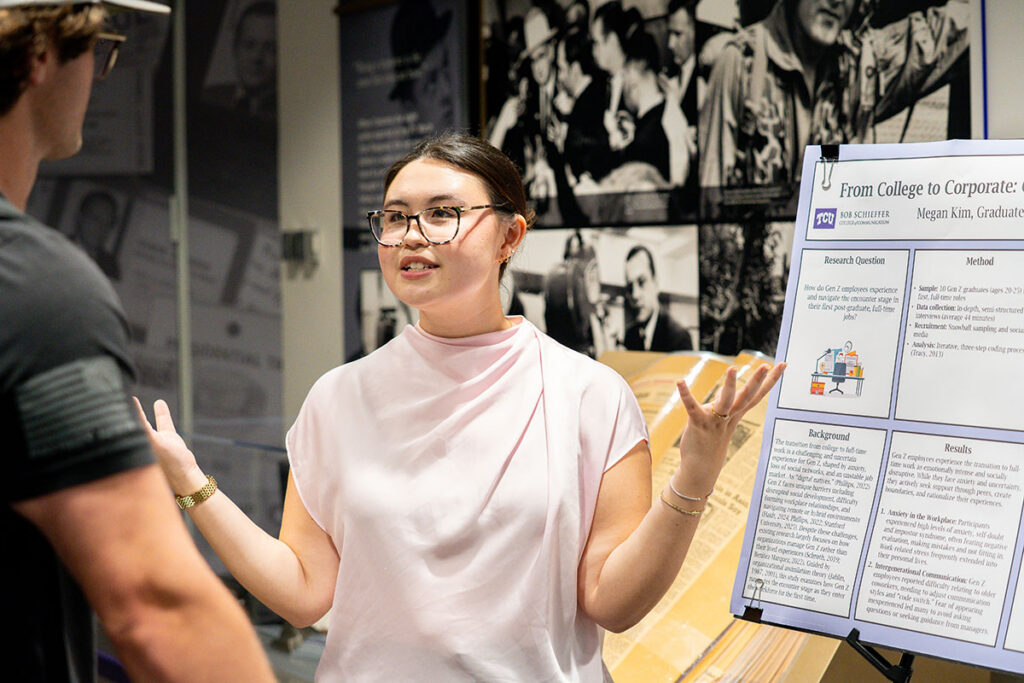
This path may fit if you want to study:
How communication shapes relationships, health, workplaces, organizations and everyday life.
Research areas
- Health communication
- Organizational communication
- Interpersonal communication
Media & Strategic Communication
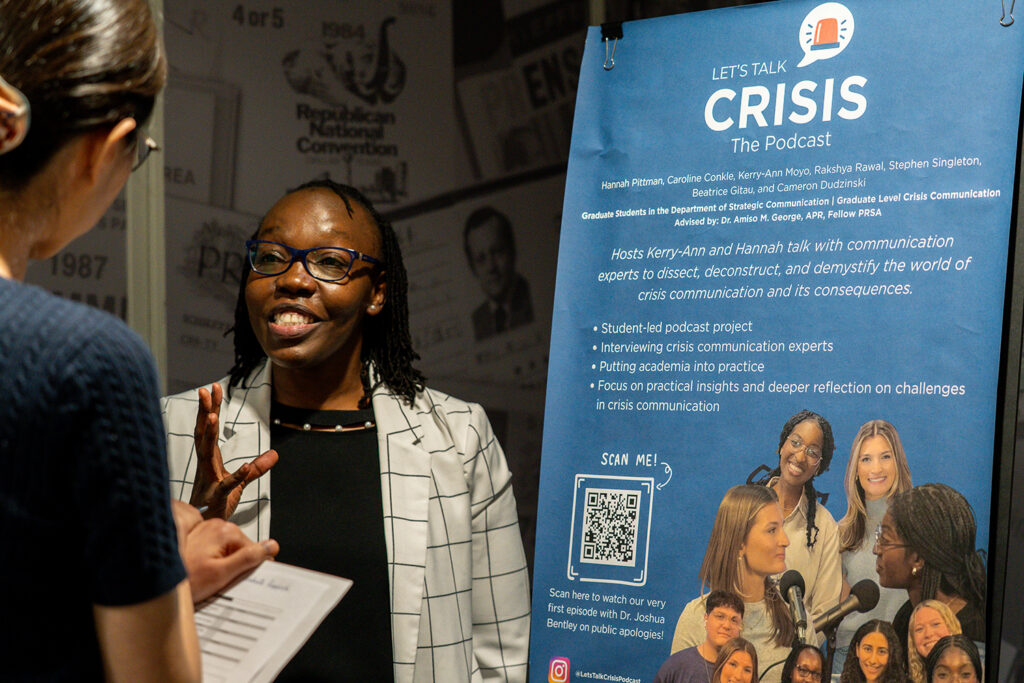
This path may fit if you want to study:
How media systems, strategic messages, digital technologies and communication practices shape organizations, culture and public life.
Research areas
- Strategic communication
- Media, culture and society
- Digital and emerging media
Both concentrations follow a four-year path from foundational coursework to dissertation completion. A minimum of 54 credit hours is required, including 42 hours of coursework and at least 12 hours of dissertation research. A complete list of courses can be found in TCU’s Graduate Catalog. Courses offered each semester are available on classes.tcu.edu.
- 18 hours of core requirements
- 6 hours communication theory
- 9 hours research methods
- 3 hours professional development and pedagogy
- 12 hours in chosen concentration, either Communication Studies or Media and Strategic Communication
- 12 elective hours
- Allows for program customization
- Up to 6 hours may be taken outside the college, with adviser approval
- No more than 6 hours total for independent study
Qualifying examination and dissertation proposal defense
- Independent research and writing of original, independent contribution to the field
- 12 dissertation credit hours minimum across sequential dissertation courses
Research with Faculty Mentors
Your research begins with questions that matter to you and grows through collaboration with faculty who share your intellectual interests. From your first semester, you’ll work with faculty researchers as you develop your research agenda, pursue conference presentations and publications, and build toward your dissertation.
Faculty mentorship is central to the doctoral experience at Schieffer. As part of your application, we encourage you to identify faculty members whose research aligns with your interests and explain how their expertise will support your goals.
Applicants who demonstrate a thoughtful connection between their research interests and our faculty’s work are often the strongest candidates.
→ Meet our faculty
Ready to pursue research that matters?
The Fall 2027 cohort will be the inaugural class of doctoral students in the Bob Schieffer College of Communication. If you’re ready to develop original research with close faculty mentorship and join a collaborative community of communication scholars, we invite you to apply.