
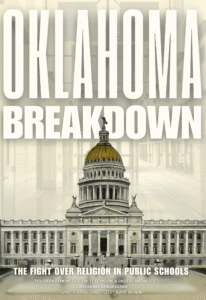
Senior Kate Schein brought her passion for documentary storytelling to Oklahoma Breakdown, a project rooted in personal experience. Inspired by her time in Oklahoma City public schools, the film follows education advocate Erika Wright as she confronts the growing influence of religious policies reshaping Oklahoma’s public schools.
A double-major in French and film, television and digital media, Schein is also a student in the John V. Roach Honors College. Her detailed look at a complex and deeply personal issue has advanced her in the Boller Competition, where seniors present their departmental honors theses for a chance to advance to the final round.
What inspired you to create Oklahoma Breakdown for your honors project?
I started creating documentary-style history videos back in 8th grade, and that early interest in telling real stories has really stayed with me. Over time, I became more interested in using film not just to document, but to explore issues that matter, so this project felt like a natural culmination of that.
How did your personal experience shape the story you wanted to tell?
Having grown up in Oklahoma City public schools, this issue is very personal to me. I’ve seen both the strengths of the system and the challenges it faces, which pushed me to approach the story with nuance. No one wants to see their childhood make headlines for negative reasons, so I wanted to use my platform to reframe the narrative around the people in Oklahoma doing things right: advocates and teachers working to make a difference.
What was the biggest challenge in documenting such a complex and personal issue?
Definitely maintaining a balanced point of view without watering down the story. It was really important to me that no audience member feels isolated, so the message can actually resonate across different perspectives. Because of that, I was very intentional in selecting my interviewees, aiming to balance expert voices with personal stories and to represent both rural and urban Oklahomans.
How did you balance storytelling with advocacy in the film?
I approached it by grounding the film in storytelling first. Rather than taking a more adversarial approach, I centered the film on Erika Wright, an education advocate. Following her lived experience, the advocacy emerges naturally, allowing the audience to connect with a real person before engaging with the broader issues.
What is the most important message you hope audiences take away?
First, that religious policies are reshaping public education across the U.S. – this isn’t just an Oklahoma issue. And second, people have the power to respond. There is a real impact in standing up for what you believe in and supporting policymakers who prioritize students.
What does it mean to you to have this project recognized and to represent Schieffer College at the Boller Competition?
I’m incredibly excited and proud. I’ve poured so many hours into this project and grown so much as a filmmaker through the process. At the end of the day, the film only matters if it reaches an audience, so having the opportunity to share it in this space means a lot to me and to the impact I hope it can have.